POU3F3-related disorder, also known as Snijders Blok-Fisher syndrome, is a rare monogenic neurodevelopmental disorder caused by a change in the POU3F3 gene. It is often associated with autism or autistic features, developmental delay, and speech and language differences.
Mission
Our mission is to support and advance research, education, awareness, and collaboration related to Snijders Blok-Fisher syndrome and other POU3F3-related conditions, while helping create momentum toward new therapies, including genetic therapies, for affected children.
What We Believe
We believe children and families affected by rare genetic disorders deserve more than fragmented information and slow progress. They deserve coordinated effort, credible resources, stronger research connections, and a future shaped by real therapeutic development.
How We Work
- support research and scientific collaboration
- provide families with clearer information and resources
- promote awareness and understanding
- help build the long-term foundation needed for treatment development
This work is rooted in both urgency and hope: urgency because families need better answers and support now, and hope because focused collaboration and sustained research can help open the door to better outcomes in the future.
Team
Our team brings together entrepreneurial, analytical, and mission-driven experience to help build a stronger future for children and families affected by POU3F3-related disorder.
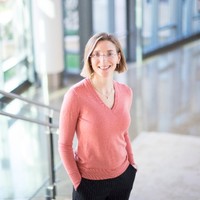
Carine Simon, Julian’s Mom
Carine is a senior lecturer in mathematical sciences at Bentley University with a background spanning operations research, analytics, strategy, and risk management. Her professional experience includes teaching and academic leadership roles at Bentley University and MIT Sloan, as well as predictive analytics and corporate strategy work at Liberty Mutual and prior quantitative roles in finance and risk. She brings strong analytical depth, strategic thinking, and systems-level problem solving to the POU3F3 Foundation’s work to accelerate research, strengthen resources for families, and support coordinated progress toward better outcomes for affected children.
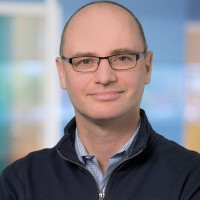
Joshua Feast, Julian’s Dad
Josh is a technology founder, entrepreneur, and board leader with a long-standing interest in human development, neurodiversity, and the use of innovation to improve lives. He co-founded Cogito, a pioneering company in real-time AI guidance and conversation intelligence, and has led organizations spanning health, technology, and mission-driven ventures. He is helping build our organization’s strategy, visibility, and long-term capacity to support research, family resources, education, collaboration, and progress toward therapies for children affected by Snijders Blok-Fisher syndrome.
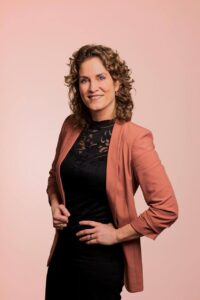
Nadja Schelvis, Ize’s Mom
Nadja is a Dutch program leader known for her drive, collaborative approach, and ability to connect people and organizations around shared goals. She believes strongly in the power of partnership and brings regional stakeholders together to achieve sustainable and meaningful outcomes. She contributes her knowledge of the Dutch healthcare system, along with a broader European perspective on research and innovation. Through the POU3F3 Foundation’s work, she is committed to advancing research that can improve the lives of affected children and provide greater support for the families around them.
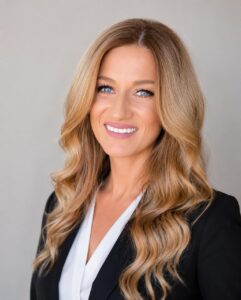
Natalia Todorova, Rosen’s Mom
Natalia is a dedicated mother, caregiver, and philologist based in Bulgaria who has devoted herself to supporting the development and future of her son, Rosen. She holds a degree in Slavic Philology from Sofia University “St. Kliment Ohridski” and has spent years managing Rosen’s complex care and therapeutic needs, coordinating an intensive daily schedule of interventions focused on his intellectual and cognitive development. Driven by a determined search for effective treatments, she has explored advanced medical options, including intravenous stem cell infusions, which brought encouraging but temporary improvement. Today, she is focused on the promise of emerging gene-therapy approaches and on building connections with organizations, researchers, and clinical efforts supporting families affected by Snijders Blok-Fisher syndrome. Her resilience, commitment, and international perspective strengthen the foundation’s work to advance research and create a clearer path toward long-term well-being and independence for affected children.
Scientific Advisory Board
Our Scientific Advisory Board helps guide the foundation’s commitment to rigorous science, clinically informed priorities, and long-term progress toward meaningful treatments for children and families affected by POU3F3-related disorder.
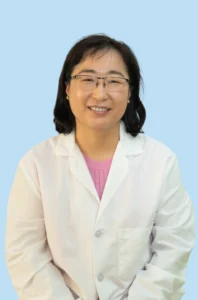
Soo-Kyung Lee, PhD
Dr. Soo-Kyung Lee is the Om P. Bahl Endowed Professor and Empire Innovation Professor in the Department of Biological Sciences at the University at Buffalo, where she also directs the FOXG1 Research Center. Her research focuses on the gene-regulatory mechanisms that guide the development of neurons and glial cells, and on the genetic and molecular basis of neurodevelopmental disorders. She has pioneered approaches to understanding how neuronal identities and functional neural circuits form and is leading translational research into FOXG1 syndrome using mouse models, genomics, and other complementary methods. Her expertise in developmental neurobiology, gene regulation, and rare neurodevelopmental disease strengthens the foundation’s work to advance rigorous research and build toward meaningful therapies for children with POU3F3-related disorder.
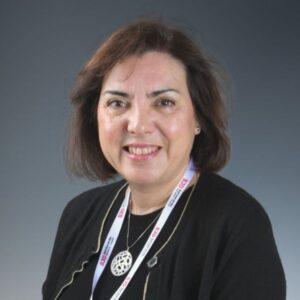
Encarna Guillén Navarro, MD, PhD
Dr. Encarna Guillén Navarro is a pediatrician and medical geneticist who serves as Head of the Genetics Area and Strategic Director of Únicas SJD at Hospital Sant Joan de Déu Barcelona. She leads research in genomic medicine and rare diseases, has directed competitive research projects and clinical trials, and contributes to national and European rare-disease genetics leadership. Her expertise adds strong depth in clinical genetics, translational research, and rare-disease strategy to the foundation’s Scientific Advisory Board.
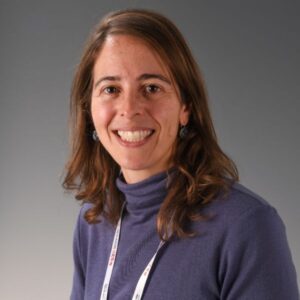
Leticia Pías Peleteiro, MD
Dr. Leticia Pías Peleteiro is a neuropediatrician at Hospital Sant Joan de Déu Barcelona with expertise in genetics and rare diseases. She works within the hospital’s Rare Diseases and Genetics services and brings direct clinical experience caring for children with complex neurodevelopmental and genetic conditions. Her perspective strengthens the foundation’s commitment to clinically grounded guidance for children and families affected by POU3F3-related disorder.
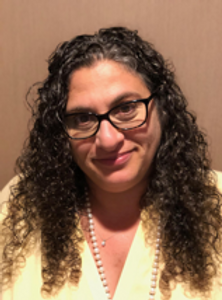
Alison Schonwald, MD, FAAP
Dr. Alison Schonwald is a developmental-behavioral pediatrician and co-owner of Touchstone Neurodevelopmental Center, an interdisciplinary practice serving young people with developmental and behavioral needs. She trained at Yale University, the University of Pennsylvania, and Boston Children’s Hospital, where she later served on the faculty for 24 years. Her clinical expertise includes psychopharmacology for children with developmental disabilities, screening for autism and developmental delays in primary care, and culturally competent developmental care. Dr. Schonwald has held leadership roles in medical education, developmental-pediatrics training, and Massachusetts early-childhood and postpartum-depression initiatives. She currently serves on the Developmental-Behavioral Pediatrics Sub-board of the American Board of Pediatrics and teaches continuing medical education courses nationally, often for the American Academy of Pediatrics.
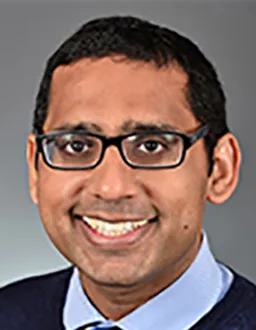
Siddharth Srivastava, MD
Dr. Siddharth Srivastava is a pediatric neurologist at Boston Children’s Hospital and Associate Professor of Neurology at Harvard Medical School who specializes in neurogenetics and neurodevelopmental disorders. His research combines gene discovery, cognitive and behavioral phenotyping, and biomarker development to better understand conditions involving autism, intellectual disability, cerebral palsy, and developmental regression. He has contributed directly to research defining the clinical and molecular spectrum of POU3F3-related disorder. His expertise strengthens the foundation’s work to connect rigorous genetic research with clinically meaningful progress for affected children and families.